

13 Dec Vague thoughts about season 10…
by B.L. Strang-Moya
CANNIBALISM
I am certain, though I cannot recall where I read it, that it was at one point posited that Colonel Henry Norwood and his sickly party of 19 had landed on the stretch of beach that is now known as 94th St. in Ocean City, MD. This is 376 years ago as of January, 2026. If you’re not familiar with the story, Norwood was a cavalier fleeing England after the beheading of King Charles I. Upon a ship called the Virginia Merchant, approximately 200 political refugees set for Jamestown Virginia only to have their ship ravaged by storms, and their bodies ravaged by a horrific famine that, although not unheard of for seafarers of the time, was a hardship beyond anything most of us could fathom. Complete and utter uncertainty on the Atlantic. Death by starvation indiscriminately laid waste to scores of innocents. And when captain John Lockier finally resolved to send a party ashore to allow the weakest to rest, he simply used the opportunity to abandon them. A decision, that I firmly believe, was not made lightly. The castaways would resort to cannibalism, not unlike the famous Donner Party of the American West. Not long after, the indigenous Kickotank nation would lead them to safety. Norwood survived and never saw Lockier again.
Pretty crazy shit if 94th street is actually where that happened.
Now, imagine you have a big pile of research both primary and secondary about Norwood’s story. It’s your job to make it into a movie. How do you do it? I will offer two ideas.
The Ken Burns way. You decide to make this film in the style of a dense character-driven PBS-style documentary awash with archival paintings, maps, and stunning maritime b-roll. You have a few different story arcs to tackle and intertwine. Obviously, the audience needs the expositional element of the English Civil War and death of King Charles I… But then you realize, maybe the audience should also know what’s going on in Jamestown, Virginia… Not to mention the progressing genocide of American indigenous nations. But don’t forget the “A” story. Your anchor. Is it Col. Henry Norwood? Perhaps you can open the film with a voiceover of one of his awesome quotes like describing King Charles’ beheading as “Unparallel’d butchery…” or about his later comrades who succumbed to the cold, “they had the envied happiness to end their miserable lives…”
Much to consider here… So the “A” plot will follow the ship setting sail from Gravesend, England. You spend some time talking about how the passengers are already thirsty and hungry before they make it past the western-most islands of Europe. After fattening up in Portugal, they starve their way down to Bermuda, then WOOSH. Plot arc: major storms ravage the ship from Bermuda up America’s east coast. More storms. More starvation. Mothers, children, crewmates die. And guess what! Another storm rips the main yard from the deck, so it’s almost impossible to properly steer course or catch wind. Adrift on the sea and starving. And then a seemingly supernatural event. Can you believe it? A prodigious number of porpoises surround the ship one night, inspiring Col. Norwood with a strange wonder. Mind you– there are primary and secondary sources that confirm that everything I have described in this documentary pitch actually happened…
So at last, the ship sends a landing party ashore off the coast of what is now Delmarva. Now, HERE is an exciting opportunity to add in some more historical context because it wasn’t until 10 years after this event that Augustine Hermann penned the first map of the Chesapeake region and, what is now called, the Delmarva Peninsula. He penned the whole map from his ship, so it was super inaccurate anyways. Adding this very specific plot point to your documentary will really emphasize to the audience that “WOW, these people were really out in the boonies!”
At last, you wind up your final punches in telling this story. Captain Lockier abandons Norwood and 18 other survivors on shore. BOOM. But, wait there’s more! Members of the shore party freeze to death, and Norwood resolves for their corpses to be eaten for sustenance. Boom, boom! And the following night? Natives appear at the encampment to offer shellfish to the survivors before leading them to safety in the following weeks.
Now, I personally believe that is a fairly compelling documentary concept. A firm, cut and dry way to tell this horrific true story.
Then there’s another way that I think is just as compelling. The high concept period drama with folk horror elements.
The Robert Eggers way. Imagine the following. The film opens with a small, rugged and battered ship against a night horizon. You achieve this through practical effects. For example, you maybe drop a couple hundred dollars on a model of the Mayflower, then chop it up, paint it, and add some other tweaks to make it look like the merchant vessel from the story.
Cut to: the captain’s quarters. Lockier and Norwood sit and lament the sad state of their journey. The two have a grim conversation, offering exposition to the audience. The viewers learn all about the grueling journey that led up to this moment. The captain drunkenly weeps, Norwood comforts him– revealing their humanity and the tenderness of their true bond. The set design, mind you, is immaculate. The attention to historical detail in costume and mise-en-scene is so astounding that you practically miss the Oscar-worthy performance by these gaunt caucasian no-name actors. Is that practical lighting too? A scene illuminated exclusively by candlelight? Eat your heart out, John Alcott.
So the party lands ashore, Lockier dips, Norwood is horrified to discover that he now has to be the leader of these battered and broken souls. After his own leader betrayed him? Oof… This is a great opportunity for you to add some dark, atonal score while Norwood’s gaunt expressionless face stares off at the ship drifting into the sunset.
The vibe is bad. The audience by this point have not blinked for some time. You have a few scenes to garner sympathy for the sick and dying characters, a few more scenes to establish tension between Norwood and the few able-bodied comrades who might be a little hot-headed. And then the following morning– death. Frozen bodies- a dramatically tense grief-laden debate scene about whether or not to eat the corpses. A perfect opportunity to milk a dramatic beat as Norwood’s facial expressions tell the story of his decision-making process.
Now, how would you portray cannibalism? For this incredibly tense high-drama portrayal of the story, I think the most tasteful way would be to have a wide shot, making Norwood and one or two other characters appear small among the dunes as they butcher their fallen comrades. This shot visually demonstrates their vulnerability against the environment while also recreating the composition from the opening shot of the ship on the sea horizon.
The audience doesn’t see the characters eat the human remains. Less is more– never forget that. Less is more. In the final scene, Norwood is dozing off by a campfire, looking miserable as ever, but wait! There’s rustling in the bushes… Slowly, quietly, Kickotank women emerge from the darkness… Norwood is frozen in disbelief. The women come close and offer him shellfish. The end.
I would argue that this is a compelling way to portray the story as a micro-budget short film. I would personally like to produce either of these films but not both. Both are ambitious, tasteful, and interesting ways to tell a true story. But that begs the question, is it still an original story? Is it technically an existing IP? Is it more truthful as a screenplay in which character traits and specific dynamics are written with creative liberty? Or is it more truthful as a documentary that provides extra historical context that not even the subjects of the film had? Both filmmakers and audiences alike must reckon with the debate of whether logic or emotion carry greater weight in the truth of storytelling. There are as many ways to watch a film as there are to make one.
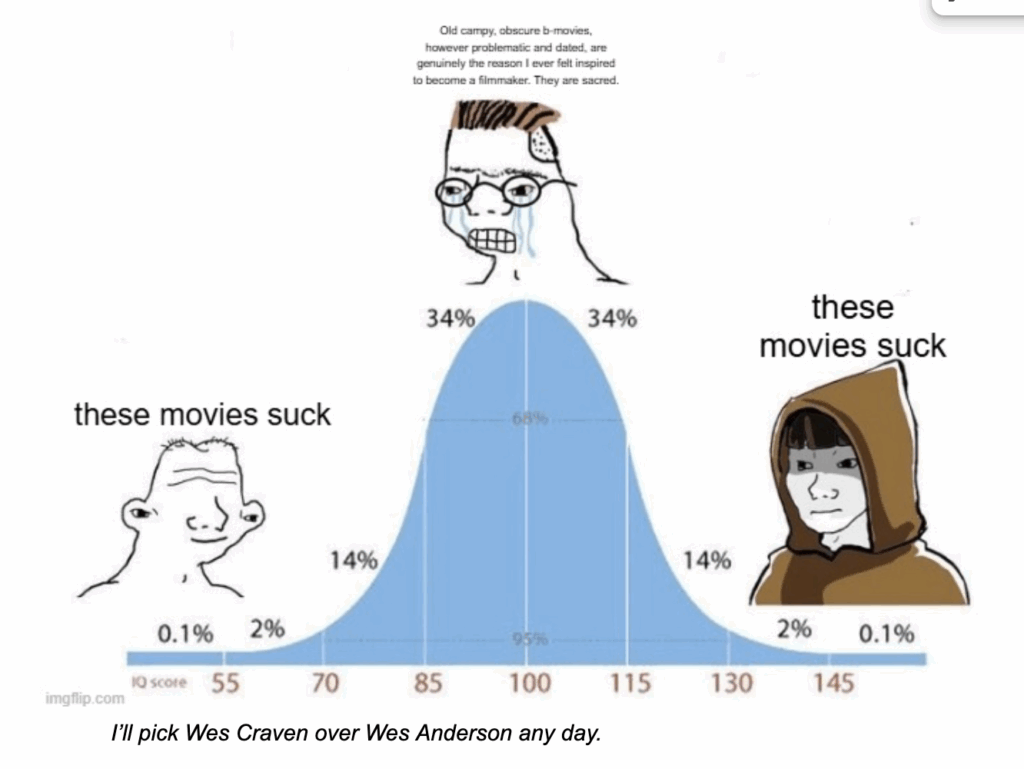
Some movie-viewers hate to contemplate these questions and possibilities. For some, it only inspires more questions. For others, the questions are a source of inspiration. I identify with the latter.
DEATHSTALKER
Season 10 of the Ocean City Film Festival will feature perhaps the most competitive selection of independent films that we have seen to date. As is typical for us, we are showing approximately 100 films from all over the world. Shorts, features, documentaries, narratives, and even a special showcase for student films.
I am intensely chuffed to announce we are showing a film called Deathstalker. Released in 2025, it is a remake of an 80’s sword-and-sorcery schlockfest of the same title. Do I recommend the original film? Yes, if you want to experience a masterclass in tonal incoherence, unintentional comedy, practical special effects, and graphic portrayal of gratuitous sexual exploitation in the fantasy genre.
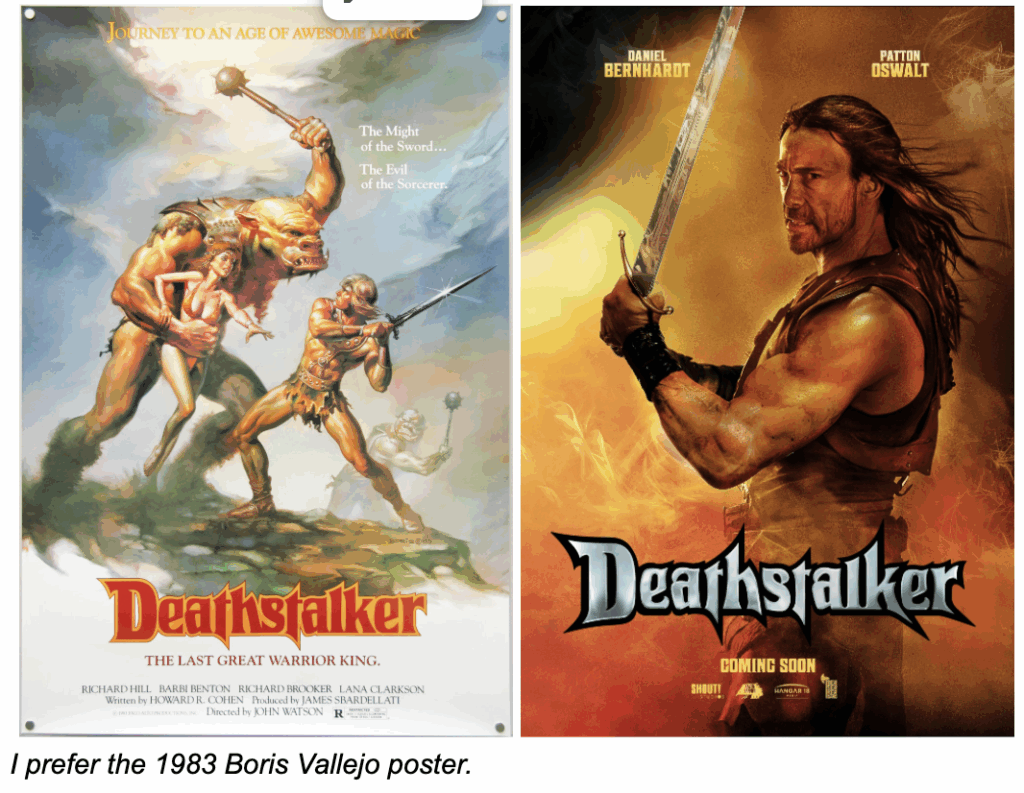
Deathstalker (2025) also features the voice talent of comedian Patton Oswalt. Yes, the Gen-X comedy hobbit himself, Patton ****ing Oswalt. You may know him from such titles as Space Cop, Ratatouille, King of Queens, Seinfeld, Bojack Horseman, and an insanely vast and diverse list of other titles in film and television… Not to mention his numerous stand-up specials on Netflix.
If you enjoy pee-pee-poo-poo humor, nerd culture, and film trivia, you’ll certainly like Oswalt. I know I do. It’s a green flag when there’s a celebrity that by all accounts would have been in my circle of rejects had we gone to high school together. I should also note the tangential connections to such entities as the My Favorite Murder podcast or Red Letter Media YouTube channel that anchors this 5’3” funny-man in the dead center of the spectrum of my most beloved parasocial relationships.
It was after reading his memoir Silver Screen Fiend: Learning About Life from an Addiction to Film that I considered, “Hmmm… perhaps we oughtta package and present this guy to the unassuming audiences of the Ocean City Film Festival…” and the next thing I knew, he accepted the offer… And Shout! Studios was more than willing to allow us to license a screening of Deathstalker. The stars aligned, my friends.
Oswalt has cultivated a major reputation as a film buff and we certainly aren’t the only film festival that has featured him as more than just a face on a screen. Considering that he grew up in Sterling Virginia and lived for a time in Baltimore, I am desperate to learn the impression that he undoubtedly has of Ocean City Maryland. I know when I first went to college back in 2013, on more than one occasion I would tell my cityfolk friends that I was from the Ocean City area and they would reply with “Oh, I’m so sorry.” Ten years later, this “trashy” beach town continues to host one of the largest and most competitive film festivals in the region.
So, my dear friends… Thanks for letting me share, and I’ll see you in March.